
Some leaks announce themselves: a drip from a fitting, a puddle under the water heater, a ceiling stain under the bathroom. Others stay out of sight for weeks. A slow drip inside a wall, a toilet that quietly runs into the bowl, or a weeping fitting above a finished basement ceiling can waste water and soak building materials long before anyone notices a problem.
The good news is that most homes already have a tool for spotting hidden leaks early. On public water, it is the water meter. On a private well, it is the pump, the pressure switch, and the pressure gauge. This guide explains how to use both, what the results can and cannot tell you, and when it makes sense to call for professional leak detection and pipe repair. It is written for homeowners in Berlin and Marlborough, and for the rest of our service area, including our home town of Coventry.
Why hidden leaks matter
A small leak rarely stays small in effect. Water that drips onto framing, subfloor, or insulation day after day can lead to rot, mold, and stained finishes. On a metered supply, every gallon that escapes is a gallon you pay for. On a private well, the cost shows up differently: the pump runs more often to make up the lost water, which adds wear to the pump, the pressure switch, and the pressure tank.
Hidden leaks also tend to be the ones that get noticed late, because the first visible sign often appears some distance from the actual leak. Water follows pipes, joists, and wiring before it drips or stains, so a ceiling spot is not always directly below the problem. That is why it helps to confirm whether you are losing water at all before anyone starts looking behind walls.
Public water: how to use your water meter as a leak detector
If your home is on public water, the meter measures every drop that enters the house. That makes it a simple way to check for a leak on the supply side of your plumbing. Here is the basic test:
- Find the meter. In most homes it is in the basement or utility area where the water service enters the house. Some properties have a meter pit outdoors instead.
- Turn off every water use. Make sure faucets are closed, nobody is showering, the dishwasher and washing machine are not running, toilets have finished filling, and any irrigation or ice maker is not drawing water.
- Look at the dials. Many residential meters have a small low-flow or leak indicator, often a triangle, star, or small dial, that turns with even a little water movement. If it is turning while nothing is on, water is flowing somewhere.
- Do a longer check. Write down the full meter reading, or take a photo, and avoid using any water for an hour or two. Overnight works well. If the reading has changed when you come back, something used water while the house was idle.
Meter designs vary, and some newer meters are read electronically. If you are not sure how to read yours, your water provider can usually explain it. In Berlin, the town's Water Control page explains that water or sewer service can come from the Town of Berlin, the Kensington Fire District, or the Worthington Fire District depending on the address, so the district listed on your bill is the one to ask.
A high bill without a change in how you use water is another meter clue. It does not prove a leak by itself, since billing periods and estimated readings vary, but it is a good reason to run the test above.
Private well: what the pump and pressure gauge tell you
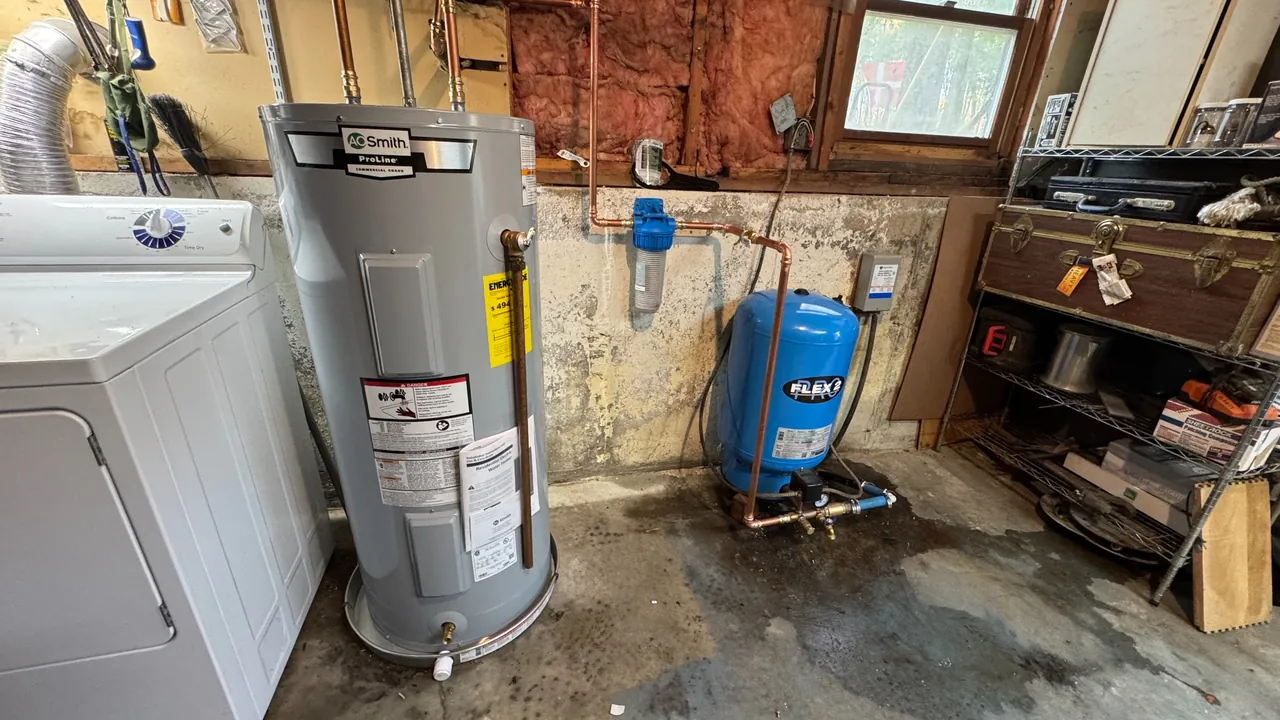
Many homes in Marlborough and the towns around Coventry get their water from a private well. There is no meter, but the well system gives you its own signals. A well pump only runs when the pressure in the system drops to the pressure switch's cut-in setting. If nobody is using water, the pressure should hold steady and the pump should stay off.
Watch for these signs:
- The pump turns on when no water is being used. You may hear the pressure switch click, or hear the pump or pressure tank fill, in a quiet house.
- The pressure gauge slowly drops with everything off. Note the reading on the gauge near the pressure tank, keep all fixtures off, and check it again later. A steady fall points to water leaving the system somewhere.
- The pump cycles more often than it used to. Short, frequent cycles can point to a leak, but they are also a classic sign of a waterlogged pressure tank or a pressure switch problem.
That last point is important. Not every well symptom is a leak. A pressure tank that has lost its air charge, a failing check valve, or a worn pressure switch can produce similar behavior. Our post on well pump and pressure tank warning signs covers those possibilities, and our well systems page explains how we service pumps, tanks, and switches. A good leak check on a well home looks at both the plumbing and the well equipment so the right problem gets fixed.
For Marlborough homes on private wells, the Chatham Health District, which serves the town, publishes private-well and water-quality resources. Those are useful if a leak turns out to be related to the water itself, which we cover below.
Check the toilets first
Before assuming a leak is inside a wall, rule out the most common silent water user in a house: a running toilet. A worn flapper or a fill valve set too high can let water trickle into the bowl or down the overflow tube without much noise.
A simple dye test helps. Put a few drops of food coloring in the toilet tank, do not flush, and wait about 15 to 20 minutes. If color shows up in the bowl, the tank is leaking into the bowl. Then flush to clear the dye. If you also see water at the top of the overflow tube, the fill level may be set too high. Our guide to running or rocking toilets explains when a repair makes sense and when replacement is the better call.
If the meter or well gauge still shows water loss after the toilets check out, keep going.
Narrowing it down with shutoff valves
Shutoff valves are the next tool. Closing the valves under sinks and behind toilets, one at a time, and repeating the meter or gauge check can show whether the loss stops when a particular fixture is isolated. If your home has branch valves for different parts of the house, those help too.
A few cautions:
- Old multi-turn valves that have not been used in years can be stiff, and forcing them can cause a leak at the valve stem. If a valve will not turn easily, leave it and mention it when you call.
- Turning off the main shutoff and watching the meter can tell you whether the leak is inside the house or between the meter and the main valve. On a well, the main valve is usually near the pressure tank.
- Do not shut off the water to a water heater and keep running hot water from it. If you are unsure, leave the water heater alone.
Supply leaks vs. drain leaks
A meter or well-gauge test only finds supply-side leaks: the pressurized pipes that carry water into the house. Those leak all the time, whether or not anything is running. Drain leaks are different. A cracked drain fitting or a failing seal under a tub only leaks when water is running down it, so the meter test will not catch it.
If you see water or a stain that only appears after someone showers, runs the dishwasher, or flushes, the drain side is the more likely suspect. Note when the water shows up and which fixture was used. That pattern is one of the most useful things you can tell a plumber, and it can save time during the visit.
Other signs of a hidden leak
Besides the meter and the well pump, watch for:
- Water stains, bubbling paint, or soft spots on ceilings and walls below bathrooms or kitchens.
- A musty smell or damp insulation in a basement or crawl space.
- The sound of running water when every fixture is off.
- Green or blue spots on copper pipe and fittings, or white crust around joints.
- Warped flooring or loose tiles near a tub, shower, toilet, or dishwasher.
Our post on plumbing mistakes and how to spot leaks fast covers more places to look.
Pinhole leaks and the water itself
Some homes see one pinhole leak in copper pipe, then another a few months later. Repeated pinholes can point to pipe age or to corrosive water. The Connecticut Department of Public Health notes that Connecticut's groundwater is typically acidic, and low-pH water tends to be corrosive to copper. That is one reason pinhole leaks show up in copper supply lines in well homes.
If we repair corrosion-related leaks, we will suggest a water test and explain whether an acid neutralizer is worth considering, so you are not just patching one pinhole after another. For Marlborough homes, our page on water treatment in Marlborough explains what to send us, and our post on acidic water and pH neutralizers goes into more detail. When the pipe is thin and pitted along a whole run, replacing that section or repiping may make more sense than repeated spot repairs.
How we track down a hidden leak
We start with simple, non-destructive checks before anyone talks about opening a wall:
- We ask where and when you see water, and whether it follows a shower, flush, or appliance cycle.
- We isolate fixtures and branches with existing shutoff valves to narrow down which part of the system is leaking.
- We check exposed piping in basements, crawl spaces, and utility rooms, along with fixture connections, supply lines, and valves.
- We watch the meter or the well pressure gauge with fixtures off to confirm whether the supply side is losing water.
- We separate supply leaks from drain leaks so the right pipe gets repaired.
If the evidence points behind a finished surface, we explain what we found and where access would be needed before any cutting happens. Plumbing repair and finish restoration are separate scopes: your written quote states what plumbing work is included and what drywall, ceiling, or flooring restoration you would need to arrange.
The repair itself depends on the pipe material, location, and condition. A single pinhole in otherwise sound copper may call for a short section replacement. A failed fitting or corroded valve gets replaced. We work with copper, PEX, and the PVC and ABS drain lines found in most local basements, and the quote confirms the work and materials before we start.
What to do if you find active water
If water is actively leaking, close the nearest fixture shutoff or the main shutoff. On a well system, turning off the pump's breaker also stops it from running. Move belongings away from the water and take a few photos of the stain or drip. Photos help us prepare for the visit.
Notes for Berlin and Marlborough homes
Berlin. Berlin is farther west than most of our service area, so a clear description of the job helps us plan the visit. Because water and sewer service can come from the Town, the Kensington Fire District, or the Worthington Fire District, note which one bills you. If a leak turns out to be on the service line or near the meter, the right utility contact matters. It also helps to send your meter test results, including the readings and the times you took them.
Marlborough. For homes on private wells, tell us how often the pump seems to run, what the pressure gauge reads, and whether the readings change with the water off. If you have water treatment equipment, mention it too. A softener or filter that is cycling, or a stuck valve on treatment equipment, can also send water to a drain, and it helps to rule that in or out.
What to tell us when you call
- Where the water appears, and roughly when you first noticed it.
- Whether it happens all the time or only when a shower, toilet, or appliance is used.
- Whether you are on a private well or public water, and what your meter or pressure gauge showed.
- Photos of the stain, the drip, or the piping near the problem area.
NextGen Plumbing Co. is a family-owned, licensed and insured plumbing company based in Coventry, serving Berlin, Marlborough, and nearby towns, with a one-year labor warranty. Call (860) 419-4111 Monday through Friday, 8:00 AM to 4:00 PM, or book online, and we will schedule as promptly as we can. You can also send a service request with your photos.
Common questions
How can I tell if I have a hidden water leak?
On public water, turn off every fixture and appliance and watch the meter. If the low-flow indicator moves or the reading changes over an hour or two, water is leaving the system. On a private well, a pump that turns on with no water in use, or a pressure gauge that slowly drops with everything off, are common clues.
Can a running toilet make it look like I have a leak?
Yes. A worn flapper or a fill valve set too high can let water run into the bowl quietly. Put a few drops of food coloring in the tank, wait 15 to 20 minutes without flushing, and check the bowl. Rule out toilets before assuming a leak is in a wall.
Why does my well pump turn on when nobody is using water?
It can mean water is leaking somewhere in the plumbing, but a waterlogged pressure tank, a failing check valve, or a pressure switch problem can cause similar behavior. A leak check on a well home should look at both the plumbing and the well equipment.
Will a water meter test find a drain leak?
No. The meter test only finds leaks on the pressurized supply side. Drain leaks only happen when water runs down the drain, so note whether a stain or drip appears after a shower, flush, or appliance cycle.
Can you find a leak without opening walls?
Often the source can be narrowed down from the symptoms, shutoff testing, and accessible piping. If the evidence points behind a finished surface, we explain where access is needed before any opening is made. Drywall, ceiling, and flooring restoration is a separate scope.
Do you provide leak detection in Berlin and Marlborough, CT?
Yes. NextGen Plumbing Co. is based in Coventry and provides leak detection and pipe repair in Berlin, Marlborough, and nearby towns. Call (860) 419-4111 Monday through Friday, 8:00 AM to 4:00 PM, or request service online, and we will schedule as promptly as we can.
Financing
We offer financing
Finance projects up to $25,000*
Prefer to pay over time rather than all at once? We’ve partnered with Wisetack to offer our customers flexible financing options. Prequalify for financing today.

*All financing is subject to credit approval. Your terms may vary. Payment options through Wisetack are provided by our lending partners. For example, a $5,500 purchase could cost $253.54 per month for 24 months, based on a 9.9% APR, or $1,833.33 per month for 3 months, based on a 0% APR. Offers range from 0 to 35.9% APR based on amount requested and creditworthiness. Not all merchants and lending partners participate in 0% interest programs. Terms range from 3 - 120 months and may vary based on merchant, lending partner, or transaction size. State interest rate caps may apply. No prepaid finance charges or participation fees. See additional terms at wisetack.com/faqs.