
In a house on town water, pressure comes from the utility's main. In a house on a private well, it comes from your own equipment: a pump that moves water, a pressure tank that stores it, and a pressure switch that tells the pump when to run. When one of those parts starts to wear out, the house usually gives you hints well before the water stops. The trick is knowing what those hints look like.
This guide is for homeowners in Hebron and Columbia, and the surrounding towns we serve from our home base in Coventry. Both towns have many homes on private wells, so well equipment questions come up often. We will walk through the most common warning signs, what each one tends to point to, what you can safely observe on your own, and when it makes sense to book a visit for well system service.
How a household well system works
Understanding the basic loop makes every symptom easier to read. Most household well systems work like this:
- The pump moves water from the well into your home. Some homes use a jet pump located in the house; others use a submersible pump down in the drilled well.
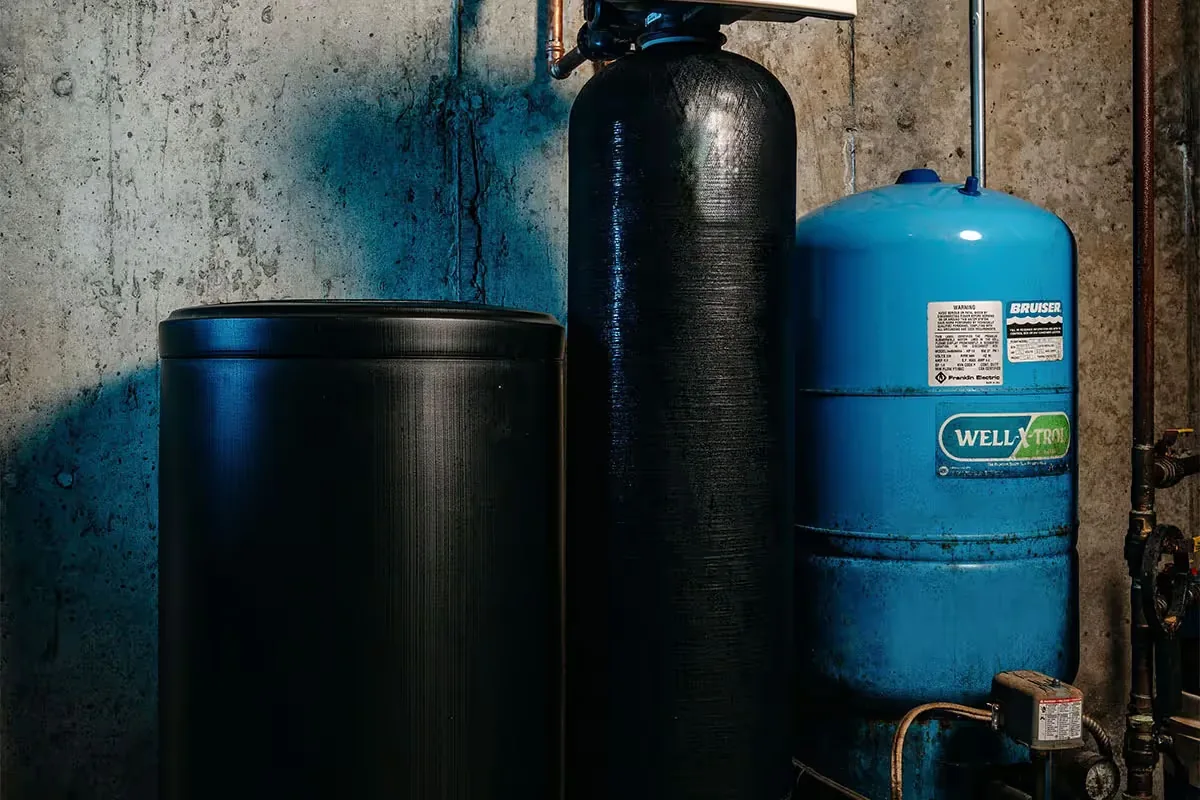
- The pressure tank holds a reserve of water under pressure. Inside the tank is an air cushion (often separated from the water by a rubber diaphragm or bladder). That cushion is what lets you run a faucet for a short time without the pump starting.
- The pressure switch senses the pressure in the system. When pressure falls to a set "cut-in" number, it starts the pump. When pressure rises to the "cut-out" number, it shuts the pump off. Common household settings are 30/50 psi or 40/60 psi, though your system may be set differently.
- The pressure gauge on or near the tank shows what is happening in real time.
When this loop is healthy, the pump runs for a good stretch, shuts off, and stays off while you use the water stored in the tank. Most well trouble shows up as a change in that rhythm.
Warning sign 1: The pump turns on and off rapidly (short cycling)
If you can hear the pump or the pressure switch clicking on and off every few seconds, or the lights flicker as a motor repeatedly starts, that is short cycling. It is one of the most common well complaints and one of the more important ones to take seriously, because every start puts stress on the pump motor and the switch contacts.
Short cycling often happens when the pressure tank has lost its air charge or has become waterlogged. With little or no air cushion, the tank cannot store much water under pressure, so the pressure rises and falls quickly and the pump keeps chasing it. A failing pressure switch, a leak somewhere in the plumbing, or a restriction in the system can produce a similar pattern, which is why the cause is worth confirming before anything gets replaced.
What to note before you call: how often the pump starts, whether it happens only when water is running or also when nothing is in use, and what the gauge reads at the moment the pump starts and the moment it stops.
Warning sign 2: Sputtering faucets or air in the lines
A faucet that spits air before the water flows can mean air is getting into the system. Possible sources include a pressure tank that has lost its diaphragm integrity, a fitting that is drawing air on the suction side of a jet pump, or a well that is struggling to deliver enough water. Sputtering that happens once after a power interruption or after plumbing work may clear on its own. Sputtering that keeps coming back deserves a closer look.
Pay attention to whether the sputtering shows up at every fixture or just one. A single fixture with a clogged aerator or cartridge is a local issue. Sputtering at every faucet in the house points back toward the well equipment.
Warning sign 3: Pressure that fades, surges, or drops when you use water
Low pressure is the symptom people notice first, and it has many possible causes. On a well, the main suspects include:
- A pressure switch that is out of adjustment or worn, so the pump cuts in or out at the wrong pressure.
- A pressure tank with the wrong air charge. A common rule of thumb is to set the tank's air pressure about 2 psi below the pump's cut-in setting, measured with the tank drained of water, though your tank's label and the manufacturer's instructions come first.
- A clogged sediment filter or treatment unit after the tank. A restriction there can feel exactly like a weak pump.
- A pump that is wearing out and can no longer build or hold pressure.
- Corroded or partly blocked piping between the tank and the house.
A quick comparison helps narrow it down. Look at the gauge near the tank and compare it with what you feel at the faucet. If the gauge reads normal but the faucets are weak, the restriction is probably after the tank, often at a filter. If the gauge itself is low, or the pressure swings widely, the tank, switch, or pump is the better place to look.
Warning sign 4: The pump runs a long time or never seems to shut off
A pump that runs far longer than it used to, or runs continuously, may be having trouble reaching cut-out pressure. Causes include a worn pump, a leak in the supply piping, a toilet or fixture quietly running, or a problem with the switch. Because a continuously running pump can overheat, this is a symptom to have checked rather than watched for weeks.
Before you call, check the obvious: is a toilet running, is an outdoor hose bib dripping, is an irrigation valve stuck open? A small steady leak can keep a pump working far more than you would expect. If you suspect a hidden leak, our leak detection and pipe repair page explains how we trace one.
Warning sign 5: A sudden jump in the electric bill or a noisy pump
A pump motor that is working too hard, starting too often, or struggling against a restriction uses more electricity. Grinding, humming, or rattling from a pump are also signs of wear. Noise by itself does not tell you which part has failed, but it is a reason to schedule an inspection while the system is still working, rather than waiting for it to quit.
Warning sign 6: Changes in the water itself
Cloudy water, grit, sediment, or sudden staining can mean something is changing in the well or in the equipment. Sediment can clog filters and fixtures, which then looks like a pressure problem. Water chemistry matters too: the Connecticut Department of Public Health notes that corrosive well water can dissolve copper from household plumbing, which is one reason repeated copper pinhole leaks in a well home are worth investigating as a pattern. A water test shows whether treatment such as a pH neutralizer, iron filter, or whole-house filtration makes sense. Our water treatment page covers the options.
Well notes for Hebron homeowners
Hebron is a Tolland County town of about 9,098 residents (2020 census) that includes Hebron Center, Gilead, and Amston. According to Hebron's Water Pollution Control Authority, sewer service is centered on Hebron center and the Amston Lake area, and homes outside those areas generally rely on septic and often on private wells. Hebron is also served by the Chatham Health District, which issues permits for well drilling and septic systems, so that is the place to start for questions about a new well.
In many Hebron well homes, water passes through more than the pump and tank. Sediment filters, a softener, or other treatment equipment often sit between the pressure tank and the rest of the house. That is why we ask about every piece of equipment when you call: a clogged cartridge and a tired pump can feel identical at the kitchen sink. Our well service section for Hebron covers what we look at. If you are also planning hot-water work, tell us about your well equipment and treatment at the same time.
Well notes for Columbia homeowners
Columbia covers about 22 square miles and had about 5,272 residents in the 2020 census. The town has no public sewer system, so homes rely on septic systems, and many draw their water from private wells. Columbia is a member of the Eastern Highlands Health District, which oversees septic and private well permits.
On a private well, the pressure tank and switch in the basement do the work that a water main does elsewhere. If pressure fades and recovers, the pump short-cycles, or fixtures sputter, start with the gauge: note the reading when the pump turns on and when it shuts off, and whether it runs more often than it used to. Those details help us narrow the cause before the visit. See the well section on our Columbia page for more.
What you can safely check yourself
You do not need tools to gather useful information. Stay on the safe side of the equipment:
- Read the gauge
- Watch the pressure when the pump starts and stops, and write down both numbers.
- Listen and count
- Note how often the pump starts and how long it runs each time.
- Check for running water
- Look for a running toilet, dripping hose bib, or open valve that could keep the pump working.
- Check filters
- If a sediment filter is downstream of the tank, look at its condition and when it was last changed.
- Take photos
- Photograph the tank, switch, gauge, and piping, plus any model labels.
What not to do: do not open the pressure switch cover with the power on, and do not adjust switch settings or tank air pressure without the right knowledge. The switch carries household voltage, and a wrong adjustment can damage the pump. If you need to turn off the pump, use the breaker for the well pump.
When to call, and what to expect
Any warning sign that keeps repeating is worth a visit: short cycling, recurring sputtering, pressure that fades, a pump that runs far too long, or noises from the equipment. Catching a failing tank or switch early often means a smaller repair than waiting until the pump itself is damaged.
We service well pressure tanks, pressure switches, gauges, jet pumps, and related piping. When a repair needs specialized well equipment, such as work down in a drilled well, we say so and discuss it with you separately. You get a written scope before approved work begins, and we schedule as promptly as we can. For larger projects, financing through Wisetack is available for projects up to $25,000, subject to credit approval.
When you call, tell us the symptom and when it started, your gauge readings, any recent changes (a power interruption, new filters, recent plumbing work), and which town you are in. If you are in Coventry, see our page on well pump and pressure tank repair in Coventry. You can also request service online or use the booking form below.
Keeping a well system healthy
- Know your equipment. Record the tank location, approximate age, and pump type. Photos of the labels save time later.
- Change filters on schedule. A neglected sediment filter is one of the most common reasons for "weak pump" calls.
- Test your water. The Connecticut Department of Public Health provides guidance for private well owners, and a test tells you what treatment, if any, your water needs.
- Service treatment equipment. Annual water treatment maintenance keeps softeners and filters from becoming a restriction.
- Fix small leaks early. Dripping fixtures and running toilets make the pump work more than it should.
- Check the system each season. See our spring plumbing checklist for seasonal steps.
A well system does not need constant attention, but it does reward paying attention. A few minutes watching the gauge and listening to the pump can tell you a lot, and a short note to us before the visit makes the diagnosis faster for everyone.
Common questions
Why does my well pump turn on and off every few seconds?
That is short cycling. It often means the pressure tank has lost its air charge or become waterlogged, but a failing pressure switch or a leak in the plumbing can cause it too. Note the gauge readings at pump start and stop and call us at (860) 419-4111.
Does low water pressure mean I need a new well pump?
Not necessarily. A clogged sediment filter, a worn pressure switch, or a tank with the wrong air charge can all cause weak pressure. We inspect the accessible components and explain which part needs attention before recommending a replacement.
How can I tell whether the problem is the pump or a filter?
Compare the pressure gauge at the tank with the pressure at your faucets. If the gauge looks normal but the faucets are weak, the restriction is likely after the tank, often at a filter. If the gauge is low or swinging widely, the tank, switch, or pump is more likely.
What are typical well pressure switch settings?
Many household systems use 30/50 or 40/60 psi (cut-in and cut-out), but your system may be set differently. Check the gauge and the switch label, and share what you see when you call.
Does NextGen Plumbing service wells in Hebron and Columbia?
Yes. We are based in Coventry and service well pressure tanks, pressure switches, gauges, jet pumps, and related piping in Hebron, Columbia, and nearby towns, Monday through Friday, 8:00 AM to 4:00 PM. When a repair needs specialized well equipment, such as work down in a drilled well, we identify that and discuss it with you separately.
Who handles private well permits in Hebron and Columbia?
Hebron is served by the Chatham Health District, which issues well drilling and septic permits there. Columbia is a member of the Eastern Highlands Health District, which oversees private well and septic permits.
Financing
We offer financing
Finance projects up to $25,000*
Prefer to pay over time rather than all at once? We’ve partnered with Wisetack to offer our customers flexible financing options. Prequalify for financing today.

*All financing is subject to credit approval. Your terms may vary. Payment options through Wisetack are provided by our lending partners. For example, a $5,500 purchase could cost $253.54 per month for 24 months, based on a 9.9% APR, or $1,833.33 per month for 3 months, based on a 0% APR. Offers range from 0 to 35.9% APR based on amount requested and creditworthiness. Not all merchants and lending partners participate in 0% interest programs. Terms range from 3 - 120 months and may vary based on merchant, lending partner, or transaction size. State interest rate caps may apply. No prepaid finance charges or participation fees. See additional terms at wisetack.com/faqs.