
Most plumbing problems are one-off repairs: a dripping valve, a cracked fitting, a leak under a sink. But in some houses the problem is not one part. It is the supply piping itself. The pipe material is reaching the end of its useful life, and each repair just moves the next failure to a different spot. When that happens, it is worth stepping back and asking whether a partial or whole-house repipe makes more sense than another patch.
This guide is written for homeowners in Enfield and East Hartford, two towns with a lot of older housing, and for the rest of our service area, including our home town of Coventry. It covers how to identify the two pipe materials that most often lead to a repipe, galvanized steel and polybutylene, the warning signs worth paying attention to, and how a repipe is planned. If you already know you want someone to look at your piping, see our repiping service page.
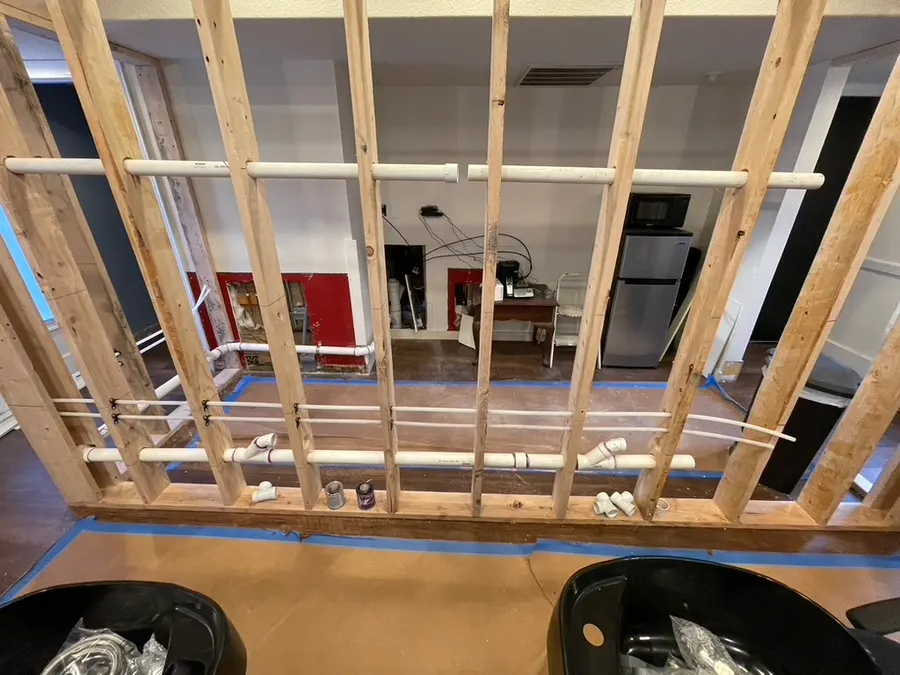
Why older homes in Enfield and East Hartford are worth a closer look
Age alone does not mean a house needs new pipes. Many older homes have had their supply lines replaced over the years, sometimes more than once. But age does tell you which materials are likely to be behind the walls, and both of these towns have a large share of older homes.
According to American Community Survey estimates, the typical Enfield home was built around 1963, with about 43% of homes older than 1960 and about 73% older than 1980. East Hartford has some of the oldest housing in our service area: by Census estimates, half of its homes were built before roughly 1961, about 47% predate 1960, and about 82% predate 1980.
In houses that age, the original water lines may have been galvanized steel or early copper, and a house built or remodeled from the late 1970s into the 1990s may have polybutylene. Many homes also end up with a mix: a copper repair here, a section of PEX there, and original pipe in the walls and ceilings that nobody has looked at in decades. Every one of those transitions is a place where trouble can start.
Both towns are mostly served by public water. East Hartford is a member town of the Metropolitan District (MDC), and Enfield's sewer-use FAQ references water bills from both Connecticut Water Company and Hazardville Water Company, so the supplier depends on the address. That matters for a repipe, because replacing the piping near the meter may require the water to be shut off at the curb, and the right utility has to be involved.
How to tell what your pipes are made of
The easiest place to look is where the water supply enters the house, usually in the basement near the water meter, and along any exposed runs in the basement ceiling or near the water heater. Here is how to tell the common materials apart:
- Galvanized steel. Dull gray or silver metal pipe with threaded joints, where the pipe screws into the fittings. A magnet will stick to it. If you lightly scratch it with a key or a coin, it stays gray rather than showing a copper color.
- Copper. Reddish-brown or brown metal pipe (it can turn greenish where it has corroded) joined with soldered fittings rather than threads. A magnet will not stick to it.
- Polybutylene. Flexible plastic pipe, most often gray, though it can be other colors. It is usually joined with crimp rings and plastic or metal insert fittings. Many polybutylene pipes carry a printed code such as "PB2110" along the side.
- PEX. Flexible plastic pipe, commonly red, blue, or white, used in many newer homes and repairs. It is printed with "PEX" and other markings along its length. PEX is a current, widely used material and is not the same as polybutylene.
- CPVC. Rigid cream or off-white plastic pipe joined with solvent cement. It shows up in some homes from more recent decades.
Keep in mind that what you see in the basement may not match what is in the walls. If you find copper near the meter, the branches up to the bathrooms may still be original galvanized, or the other way around. Photos of what you can see are a good start, and we confirm the rest during an assessment.
Galvanized steel: why it wears out
Galvanized pipe is steel coated with a layer of zinc to slow rust. It was a standard material for water supply lines in many older homes. Over time, the zinc coating wears away and the steel underneath corrodes from the inside. The rust and mineral buildup gradually narrows the inside of the pipe, much like a clogged artery.
Because the damage happens on the inside, galvanized pipe can look fine from the outside long after its flow has been reduced. Common signs include:
- Low water pressure or poor flow throughout the house, or at certain fixtures, that gets slowly worse over the years.
- Rusty, brown, or discolored water, especially when a tap is first opened after sitting overnight.
- Leaks at threaded joints, where the pipe wall is thinnest after the threads are cut.
- Corrosion where galvanized meets copper. When those two metals are connected directly, without a proper dielectric fitting, the joint can corrode faster than either pipe would on its own.
Low flow at a single fixture is not always the pipe. A clogged faucet aerator, a partly closed shutoff valve, or a failing pressure-reducing valve can cause similar symptoms. That is why we check the simple things before talking about a repipe. If pressure is the main concern, our page on water pressure regulators explains how incoming pressure is controlled on a municipal supply.
Polybutylene: a material with a reputation
Polybutylene is a gray plastic supply pipe that was used in many homes built from the late 1970s into the 1990s. It was inexpensive and easy to install, but it developed a reputation for failing, often at the fittings, and often without much warning. It is widely reported that chlorine and other disinfectants in treated public water can weaken the pipe and fittings over time, which is one reason the material fell out of use.
The difficulty with polybutylene is that it can look perfectly normal right up until a fitting lets go. There is no reliable way to judge its remaining life just by looking at it. Homeowners with polybutylene usually consider replacement for a few reasons:
- A fitting or section of pipe has already leaked, and they are worried about the rest of the system.
- They are planning a remodel or a finished basement and do not want to close up walls or ceilings over it.
- A home inspection, an insurer, or a prospective buyer has flagged it.
If you find polybutylene in your home, it is not a reason to panic, but it is a good reason to have the piping and fittings looked at and to make a plan.
Copper with repeated pinhole leaks
Copper is a long-proven material, and in many homes it lasts for decades. But if you have had several small pinhole leaks in copper lines, especially in the same part of the house, the problem may be with the pipe as a whole rather than one bad spot. Water chemistry plays a role here. The Connecticut Department of Public Health notes that Connecticut's groundwater is typically acidic and can corrode copper plumbing, which matters most for homes on private wells. If corrosion is behind repeated leaks, testing the water and considering treatment alongside new pipe helps the new piping last. Our post on acidic water and pH neutralizers goes into more detail.
Signs it is time to consider repiping
None of these signs means you automatically need a whole-house repipe. Together, they help decide whether a targeted repair, a section of new pipe, or a full repipe makes the most sense:
- Repeated leaks in the supply piping, particularly in the same area or the same material.
- Galvanized steel supply lines, especially with low flow or discolored water.
- Polybutylene supply piping anywhere in the house.
- Low pressure or poor flow throughout the house that is not explained by the incoming supply or a pressure-reducing valve.
- Rusty or discolored water from both the hot and cold taps. If it only comes from the hot side, the water heater may be the source instead.
- A remodel or addition that already has walls or ceilings open. Replacing old piping while the access is there is often the most practical time to do it.
- A patchwork of materials from years of repairs, with many transitions and fittings that are each a possible failure point.
If you have an active leak right now, start with leak detection and pipe repair. Once the immediate problem is handled, we can talk about the bigger picture. Our post on hidden leak clues also explains how to use your water meter to check for leaks you cannot see.
Copper or PEX for new piping?
Both are common choices for new supply piping, and many repipes use a combination.
- Copper is rigid and long-proven. It is often preferred for exposed runs, such as in a basement ceiling or near the water heater, and it holds up well to physical contact. It needs more fittings and soldered joints, and it is affected by corrosive water.
- PEX is flexible, so it can often be run in longer continuous lengths with fewer fittings. That flexibility means it can frequently be fished through walls and ceilings with less opening of finished surfaces. It is not affected by acidic water the way copper is. It should be kept out of direct sunlight and installed and supported according to the manufacturer's instructions.
We explain the trade-offs for your specific house, including your water conditions and how the piping will be routed, and put the materials in writing in your quote.
How a repipe is planned
A repipe is a project, not a quick repair, and good planning is what keeps the disruption down. Here is how we approach it:
- Assessment. We look at the existing piping, its route through the house, the access available from the basement, crawl space, or attic, and which fixtures it serves.
- Scope. Whole house or a section? Which fixtures, shutoff valves, and connections are included? Where will walls or ceilings need to be opened?
- Permits. Repiping work may require a plumbing permit from your town's building department. We identify what applies to your project.
- Water outages. We plan the work so the water is off for as little time as practical, and we let you know in advance when it will be off. If a curb shutoff is needed, the water supplier for your address has to be part of that plan.
- Restoration. Patching drywall, ceilings, and finishes is separate from the plumbing work. Your quote spells out who handles it.
A typical repipe replaces the main distribution lines and the branches to each fixture, along with new shutoff valves at sinks and toilets. Connections to the water heater, any treatment equipment, and the water meter or well pressure tank are reviewed as part of the plan. Drain, waste, and vent piping is a separate system; if drains are part of the problem, we assess them separately.
One more detail worth knowing: in some older homes, the electrical system is grounded or bonded to the metal water piping. When metal pipe is replaced with plastic, that bond may need to be checked or moved. That is work for a licensed electrician, and it is something to plan for rather than discover afterward.
What to have ready when you call
A few details help us understand your situation before we visit and make the assessment more useful:
- Pipe material you can see: galvanized, gray plastic, copper, or a mix, with photos if you can take them.
- The history: how many leaks, where they were, and what repairs have already been done.
- Access and plans: finished basements or ceilings, and any remodeling you are planning soon.
- Your water supplier, or whether the home is on a private well.
Call us at (860) 419-4111, Monday–Friday, 8:00 AM–4:00 PM, or book online. We schedule as promptly as we can, and your written quote confirms the work and materials before anything starts. For a larger project like a repipe, financing through Wisetack is available for projects up to $25,000, subject to credit approval; see how financing works.
Common questions
How can I tell if I have galvanized pipes?
Galvanized steel is dull gray metal pipe with threaded joints. A magnet sticks to it, and a light scratch stays gray instead of showing a copper color. Check near the water meter and along exposed pipes in the basement.
Is polybutylene the same as PEX?
No. Polybutylene is an older gray plastic pipe used in many homes from the late 1970s into the 1990s, with a reputation for failing at fittings. PEX is a different, current material, commonly red, blue, or white, and is printed with "PEX" along its length.
Do I need to replace all of my pipes at once?
Not always. Sometimes the honest answer is a few targeted repairs or one section of new pipe. We start with what we find and explain your options, from a single problem section to a whole house.
Will repiping mean opening my walls?
Some access is usually needed, but routing through basements, crawl spaces, and attics, and using flexible PEX where appropriate, can reduce it. Your quote identifies the expected openings, and patching and finishes are spelled out separately.
Does repiping need a permit in Enfield or East Hartford?
Repiping work may require a plumbing permit from the town's building department. We identify what applies to your project as part of planning the job.
Is financing available for a repipe?
Yes. Financing is available through Wisetack for projects up to $25,000, subject to credit approval. See our financing page for details and the required disclosure.
Financing
We offer financing
Finance projects up to $25,000*
Prefer to pay over time rather than all at once? We’ve partnered with Wisetack to offer our customers flexible financing options. Prequalify for financing today.

*All financing is subject to credit approval. Your terms may vary. Payment options through Wisetack are provided by our lending partners. For example, a $5,500 purchase could cost $253.54 per month for 24 months, based on a 9.9% APR, or $1,833.33 per month for 3 months, based on a 0% APR. Offers range from 0 to 35.9% APR based on amount requested and creditworthiness. Not all merchants and lending partners participate in 0% interest programs. Terms range from 3 - 120 months and may vary based on merchant, lending partner, or transaction size. State interest rate caps may apply. No prepaid finance charges or participation fees. See additional terms at wisetack.com/faqs.