
Most people replace a kitchen faucet for one of three reasons: the old one drips or leaks, the finish has worn out, or the kitchen is getting an update and the faucet is part of the new look. Whatever the reason, the faucet aisle and the manufacturer websites can be overwhelming. There are pull-down and pull-out sprayers, single-handle and two-handle designs, touch and touchless models, and a long list of finishes, all at a wide range of prices.
This guide is written for homeowners in Glastonbury and South Windsor, and for the rest of our service area, including our home town of Coventry. We will cover how to narrow down the choices, the measurements and details that decide whether a faucet will actually fit your sink, what to know about the brands we install most often, and what a professional kitchen faucet installation includes beyond the faucet itself.
Start with how you use the sink
Before you look at finishes, think about what happens at your kitchen sink every day. A household that cooks most nights and hand-washes big pots needs something different from a household that mostly rinses dishes for the dishwasher. A few questions help:
- Do you fill tall pots or rinse large pans? A taller spout with a pull-down sprayer makes that easier, especially in a deep sink.
- Do you often have messy hands while cooking? A single-handle faucet, or a touch or touchless model, lets you turn the water on with a wrist, forearm, or tap of the hand.
- Is the sink under a window or a low cabinet? A tall arched spout or a handle that swings back may hit the window sill or cabinet. Measure the clearance before you buy.
- Does anyone in the house have trouble gripping? Lever handles are generally easier to operate than knobs, and touch or touchless operation can help too.
- Do you want filtered drinking water at the sink? That may mean a separate filtered-water faucet, which needs its own hole in the sink or counter and room under the sink for the filter.
Faucet styles, in plain terms
- Pull-down
- The sprayer head is built into a tall, arched spout and pulls straight down into the sink on a hose. This is the most common style in kitchens today. It works best with deeper sinks and enough clearance above the faucet.
- Pull-out
- The spout is usually shorter, and the sprayer pulls out toward you. Pull-out models can be a better fit under a low cabinet or window, and the hose often reaches a little farther outside the sink.
- Single-handle
- One lever controls both flow and temperature. Easy to use with one hand and the usual choice for a busy kitchen.
- Two-handle
- Separate hot and cold handles, often in a bridge or traditional style. Many people like the look, but it takes two hands to set the temperature.
- Side sprayer
- A separate sprayer mounted beside the faucet. Less common in new installations now that pull-down and pull-out heads are standard, but still available.
- Touch and touchless
- Electronic models that turn on with a tap on the spout or handle, or a wave of the hand near a sensor. They need batteries or a power source, which is worth knowing before you choose one.
Measure before you shop: holes, deck, and clearance
The single most common surprise with a new kitchen faucet is that it does not match the sink or counter it is going into. Before you buy, look under the sink and on the deck around the old faucet.
- Count the holes. Kitchen sinks and counters are typically drilled with one to four holes. A single-hole faucet can often cover a three-hole setup with a deck plate (also called an escutcheon), which usually comes with the faucet or is sold separately. Extra holes can also hold a soap dispenser, a side sprayer, a filtered-water faucet, or a dishwasher air gap.
- Check what is already in the extra holes. If the old setup has a dishwasher air gap or a soap dispenser, plan for where those will go. Removing one can leave an open hole that needs a cover.
- Measure the deck thickness. Faucets list a maximum mounting thickness. Thick stone countertops with undermount sinks sometimes need longer mounting hardware.
- Measure spout height and reach. The spout should reach roughly to the center of the bowl, and the height should clear any cabinet, shelf, or window above.
- Look at the handle swing. Some single-handle faucets need room behind the faucet for the lever to move. A backsplash or window sill can block it.
If you send us the make and model, or a photo of the box, along with a photo of your current sink and the plumbing underneath, we can confirm compatibility before the visit. The same goes for faucets you buy yourself, which we are happy to install.
Brands we install most often
We regularly install kitchen faucets from Delta, Kohler, and American Standard. All three make a wide range of styles and price points, and replacement parts for their faucets are widely available, which matters when a cartridge eventually wears out. A few points worth knowing as you compare:
- Delta offers pull-down, pull-out, and two-handle kitchen faucets, including models with its Touch2O touch technology, which turns the water on and off with a tap on the spout or handle.
- Kohler makes a broad line of kitchen faucets, from simple single-handle models to professional-style spring spouts and touchless designs, in many finishes.
- American Standard offers single-handle, pull-down, and two-handle kitchen faucets, including touchless options, with a focus on practical, widely available designs.
Features and warranty terms vary by model and change over time, so check the manufacturer's current specifications and warranty for the specific faucet you are considering. Manufacturer coverage comes from the manufacturer, and for a customer-supplied faucet, from the store you bought it from as well.
Details that matter more than the finish
Two faucets that look nearly identical can feel very different after a few years of use. Some things to compare:
- Valve or cartridge type. Most quality single-handle faucets use a ceramic disc cartridge, which is durable and resists drips. When a cartridge wears, it can usually be replaced without replacing the whole faucet, as long as parts are available.
- Flow rate. Under federal standards, kitchen faucets sold in the U.S. are limited to a maximum of 2.2 gallons per minute at 60 psi. Many models flow less. A lower flow rate saves water but takes longer to fill a pot, so check the number if that matters to you.
- Lead-free materials. Federal law limits the lead content of faucets and other plumbing products that carry drinking water. Look for certification to the applicable NSF/ANSI standards, which reputable brands list on the box or product page.
- Sprayer hose and docking. Pull-down sprayers rely on a weight or a magnet to retract and stay docked. A head that sags or will not stay in place gets annoying quickly, so read reviews from verified buyers or try the action in a showroom.
- Finish. Finishes such as stainless, matte black, and brushed nickel each show water spots and fingerprints differently. Hard water spotting is something to consider if your home has untreated well water.
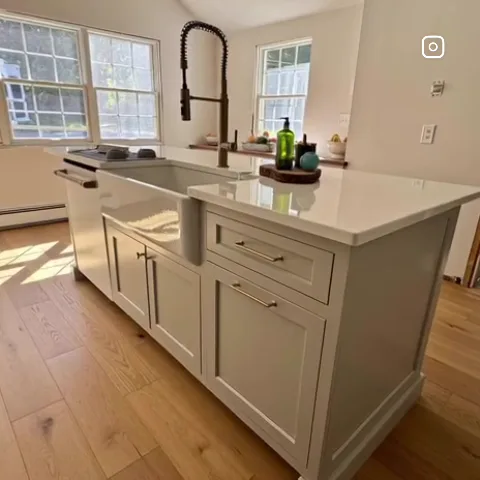
What a proper installation involves
Replacing a kitchen faucet looks simple on video, but most of the work happens in a cramped cabinet, and the parts you do not see decide whether the job lasts. A typical installation covers:
- Shutting off the water at the fixture shutoff valves, and confirming they actually close. Older multi-turn valves often stick or drip once they are disturbed.
- Removing the old faucet, including corroded mounting nuts, which can be the hardest part of the job.
- Cleaning and checking the deck so the new faucet or deck plate seats flat and seals properly.
- Mounting the new faucet to the manufacturer's instructions, with the hose, weight, and any electronic components routed so they do not snag on the drain or disposal.
- Connecting the supply lines. Many new faucets come with attached braided supply lines; others need new ones. Either way, the connection to the shutoff valve has to be right.
- Flushing and testing. We run water through before installing the aerator to clear debris, then check every connection for leaks with the water on, hot and cold.
When we install a faucet, we also look at the shutoff valves, supply lines, and drain connections underneath. If a valve will not close fully, or a supply line is cracked or kinked, we recommend replacing it while everything is already apart, and the quote shows it. You decide before work begins. Your written quote confirms the faucet, the parts, and the work before anything starts.
Is the faucet part of a bigger kitchen project?
A faucet swap often grows into more. Replacing the sink, adding or removing a garbage disposal, or connecting a new dishwasher or refrigerator water line all change the plumbing under the counter. Moving the sink to a new location changes the rough plumbing and may require a permit. If cabinets or countertops are being replaced, tell us who is handling that work so we can plan the disconnect, the rough-in if needed, and the final connections around their schedule.
If you are planning a larger kitchen update, financing through Wisetack is available, subject to credit approval.
Notes for Glastonbury and South Windsor homes
Glastonbury. Glastonbury has both utility-served neighborhoods and homes on private wells. If your home is on a well and your old faucet is crusted with scale, has a clogged aerator, or the sink is stained, the water itself may be part of the problem. Hard water, iron, and sediment wear cartridges and clog aerators on any brand of faucet. It may be worth looking at water treatment in Glastonbury before or alongside a new faucet, based on an actual water test rather than the address alone.
South Windsor. South Windsor's Water Pollution Control Authority oversees the town's sanitary sewer system and connections to it. For a kitchen update, the parts that matter are inside the house: the sink, faucet, disposal, dishwasher, and the drain and supply connections under the counter. If you are removing a disposal, replacing a double-bowl sink, or adding equipment, list everything that is changing so the quote covers the full drain arrangement. If the kitchen drain has been slow or backing up, mention that too. A new faucet will not fix a partly blocked line, and drain cleaning may be a separate step.
Signs it is time to replace rather than repair
Not every dripping faucet needs replacing. A worn cartridge or O-ring can often be replaced on its own. Replacement usually makes more sense when:
- The faucet leaks from the base or under the sink even after repairs.
- Replacement parts for the model are no longer available.
- The finish is peeling or corroded, or the body is cracked.
- The sprayer hose leaks or will not retract, and parts are hard to find.
- You are already updating the sink or countertop.
If a leak under the sink has been going on for a while, check the cabinet floor for soft spots or staining. Our post on plumbing mistakes and how to spot leaks fast covers other places to look, and our plumbing repair page explains how we handle repairs.
What to tell us when you call
A few details help us plan the visit:
- The make and model of the new faucet, or a photo of the box if you bought it already.
- A photo of the current faucet and the plumbing under the sink, including the shutoff valves.
- Whether anything else is changing, such as the sink, countertop, disposal, or dishwasher.
- Whether your home is on a private well or public water.
NextGen Plumbing Co. is a family-owned, licensed and insured plumbing company based in Coventry, serving Glastonbury, South Windsor, and nearby towns, with a one-year labor warranty. Call (860) 419-4111 Monday through Friday, 8:00 AM to 4:00 PM, or book online, and we will schedule as promptly as we can. You can also send a service request with your photos.
Common questions
Will you install a kitchen faucet I bought myself?
Yes. Send the make and model, or a photo of the box, before the visit so we can confirm it fits your sink, counter, and shutoff valves. Manufacturer coverage for a customer-supplied faucet comes from the manufacturer and the store you bought it from.
Should I choose a pull-down or pull-out kitchen faucet?
A pull-down faucet has a tall spout and suits deep sinks with plenty of clearance above. A pull-out faucet is usually shorter and can be a better fit under a low cabinet or window, and its hose often reaches a little farther.
Can a single-hole faucet go on a sink with three holes?
Often, yes. Many single-hole faucets can use a deck plate that covers the extra holes. You can also use the extra holes for a soap dispenser, side sprayer, or filtered-water faucet.
Do you replace shutoff valves when installing a new faucet?
If the existing valves are worn or do not close fully, we recommend replacing them while everything is apart and list it in the quote. You decide before work begins.
Why does my faucet aerator keep clogging?
Sediment, scale, or debris in the water collects in the aerator screen. This is common in homes with untreated well water. Cleaning the aerator helps, and a water test can show whether treatment such as whole-house filtration or a softener makes sense.
Do you install kitchen faucets in Glastonbury and South Windsor?
Yes. NextGen Plumbing Co. is based in Coventry and installs kitchen faucets and fixtures in Glastonbury, South Windsor, and nearby towns. Call (860) 419-4111 Monday through Friday, 8:00 AM to 4:00 PM, or request service online, and we will schedule as promptly as we can.
Financing
We offer financing
Finance projects up to $25,000*
Prefer to pay over time rather than all at once? We’ve partnered with Wisetack to offer our customers flexible financing options. Prequalify for financing today.

*All financing is subject to credit approval. Your terms may vary. Payment options through Wisetack are provided by our lending partners. For example, a $5,500 purchase could cost $253.54 per month for 24 months, based on a 9.9% APR, or $1,833.33 per month for 3 months, based on a 0% APR. Offers range from 0 to 35.9% APR based on amount requested and creditworthiness. Not all merchants and lending partners participate in 0% interest programs. Terms range from 3 - 120 months and may vary based on merchant, lending partner, or transaction size. State interest rate caps may apply. No prepaid finance charges or participation fees. See additional terms at wisetack.com/faqs.